JEV: The System 1 Model AI Engineers Need to Know
From Generative AI to High-Speed, Automated Decision-Making: Why JEV Matters for AI Engineers
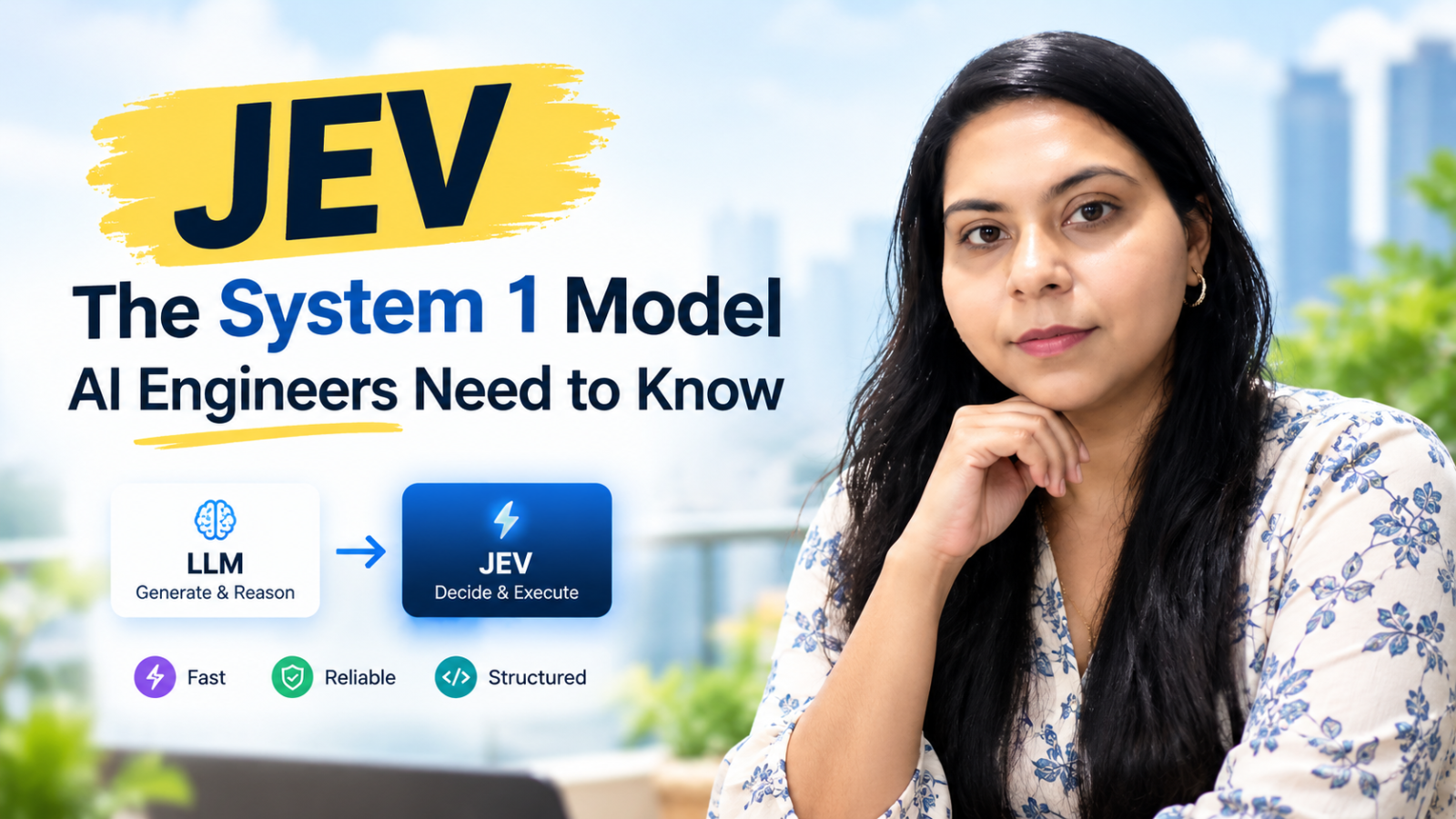
As the AI landscape matures, the focus is shifting from generative content to high-frequency automated decision-making. For AI Engineers, Forward Deployed Engineers (FDEs), and Agentic AI Engineers, mastering System 1 models like the recently unveiled JEV—is becoming a critical differentiator in building robust, production-grade workflows.
The Shift: From Chatbots to Logic Engines
While traditional Large Language Models (LLMs) are optimized for human interaction through Reinforcement Learning with Human Feedback (RLHF), System 1 models are designed for computational efficiency and reliability.
Modern engineers are increasingly tasked with moving AI out of the "chat window" and into the software loop. System 1 models are essential here because they:
🧑🏫✨ From the author · ByteClass live cohortAI Agents & Engineering 10 Weeks CohortFreeJoin the cohort →Provide Type-Safe Outputs: Unlike generative models that output fluid text, System 1 models provide structured, programmatic values (like JSON) that integrate directly into existing codebases.
Operate at Scale: With speeds up to 200x faster than traditional LLMs, these models can handle hundreds of decisions per second, making them viable for real-time application logic.
Utilize Decision Primitives: By using core primitives like Choice, Score, and No, engineers can build predictable workflows that act as the "brain" behind automated systems.
Why This Expertise Matters for Your Career
Mastering System 1 models is a strategic career move for specialized technical roles. Here is how it impacts your workflow and professional value:
🛍️✨ From the author · ByteStoreResume Quick Review₹299View offer →1. For AI Engineers: Mastering these models allows you to build logic-heavy pipelines where latency and reliability are critical. Instead of relying on slow, expensive LLMs for simple classification or scoring tasks, you can use these specialized models to improve the performance and cost-efficiency of your architectures.
2. For Forward Deployed Engineers (FDEs): Your job is to bridge the gap between AI capabilities and a client's messy, real-world data. Understanding how to deploy structured decision-making primitives allows you to provide clients with the predictable, type-safe results they need to automate their internal business processes with confidence.
3. For Agentic AI Engineers: Agentic AI systems are essentially a sequence of decisions. By integrating System 1 models, you enable agents to make high-frequency micro-decisions —like should I re-run this tool? or is this output sufficient?—without the overhead of a full reasoning model, significantly increasing the agent's autonomy and reliability.
In short, while LLMs will continue to handle creative generation, System 1 models are the backbone of the next generation of AI-powered infrastructure.
Developing expertise in these lean, decision-focused models is the key to evolving from a generalist into an engineer capable of building truly autonomous, high-performance systems.
🛍️ Viveka Sharma's shelf
Courses, cohorts and more from the author
ABOUT ME: I’m an AI Engineer, Global AI Leader, and Technology, Career & Personal Branding Mentor, focused on Generative AI, Agentic AI, emerging technologies, and practical career growth. I mentor students and professionals on AI career transitions, practical projects, car
Visit my ByteStoreBuild Your Skills. Build Your Brand. Build Your CareerMore from Viveka Sharma
 Viveka SharmaFreelancer
AI Is Reshaping the IT Job Market: How Professionals Can Stay Relevant
AI is changing team structures, entry-level opportunities, career expectations, and the skills professionals need to remain valuable.
 Viveka SharmaFreelancer
Stop Waiting for Students. Start Building Your Community.
Build your own visibility, create value for learners, and grow a community where trainers and learners succeed together.
 Viveka SharmaFreelancer
7 Ways to Turn Your Skills Into Income Without Quitting Your Job | ₹3L/Month
You don’t always need to quit your job to build an additional income stream. The idea is to create parallel income levers alongside your full-time career—using
 Viveka SharmaFreelancer
Stop chasing generic branding advice like "post consistently" and start building Authority.
Most people stay invisible for years because they lack a structure. If you want to move from being just another content creator to a recognized expert, you need
💬 Comments (0)
Top · NewestSign in to comment